Key Vocab and Concepts:
Comprehension- The process of construction meaning using both the author’s text and the readers background knowledge for a specific purpose.
Text Complexity- a way to determine the comprehension demands of a book or other text using reader and text factors.
What Readers think about when reading- Readers activate prior knowledge, examine the text to uncover the organization of it, make predictions, connect to their own experiences, create a mental image, draw inferences, notice symbols and other literacy devices, and monitor their understanding.
Comprehension factors and their roles- Background knowledge: students activate their world and literary knowledge to link what they know to what they are reading. Vocabulary: students recognize the meaning of familiar words and apply word-learning strategies to understand what they are reading. Fluency: students have adequate cognitive resources available to understand what they are reading when they read fluently.
Comprehension Strategies and what readers do- Comprehension strategies are thoughtful behaviors that students use to facilitate their understanding as they read. Some are cognitive where they involve thinking and others are metacognitive where the student reflects on their thinking. (the picture show all the strategies and what readers do)
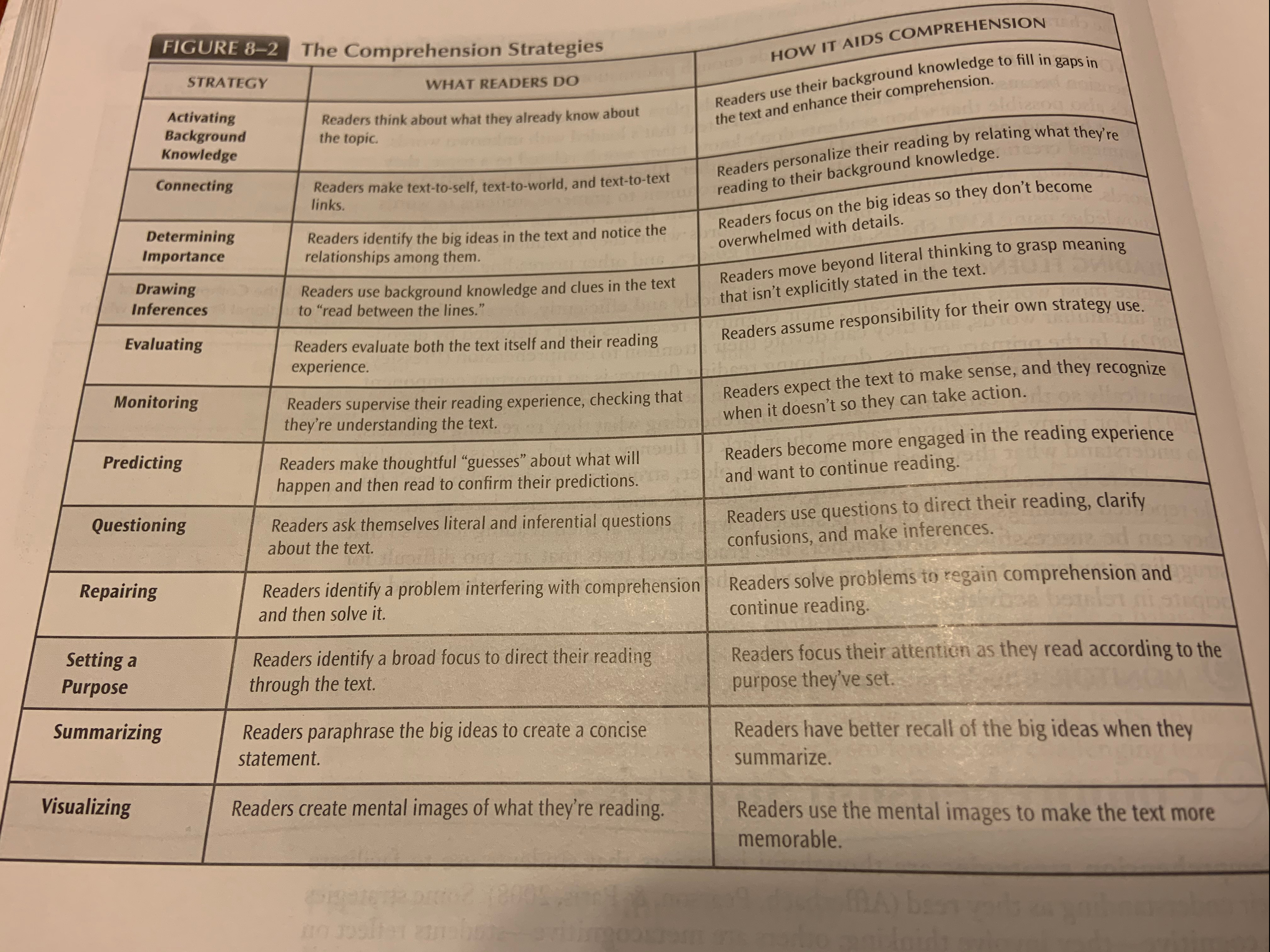
How to create an expectation of comprehension- Involve the students in authentic reading activities, provide access to a well stocked classroom library, teach students to use comprehension strategies, ensure that students are fluent readers, provide opportunities for students to talk about the books they are reading, and link vocabulary instruction to underlying concepts.
How the Comprehension strategies fit into the reading process- 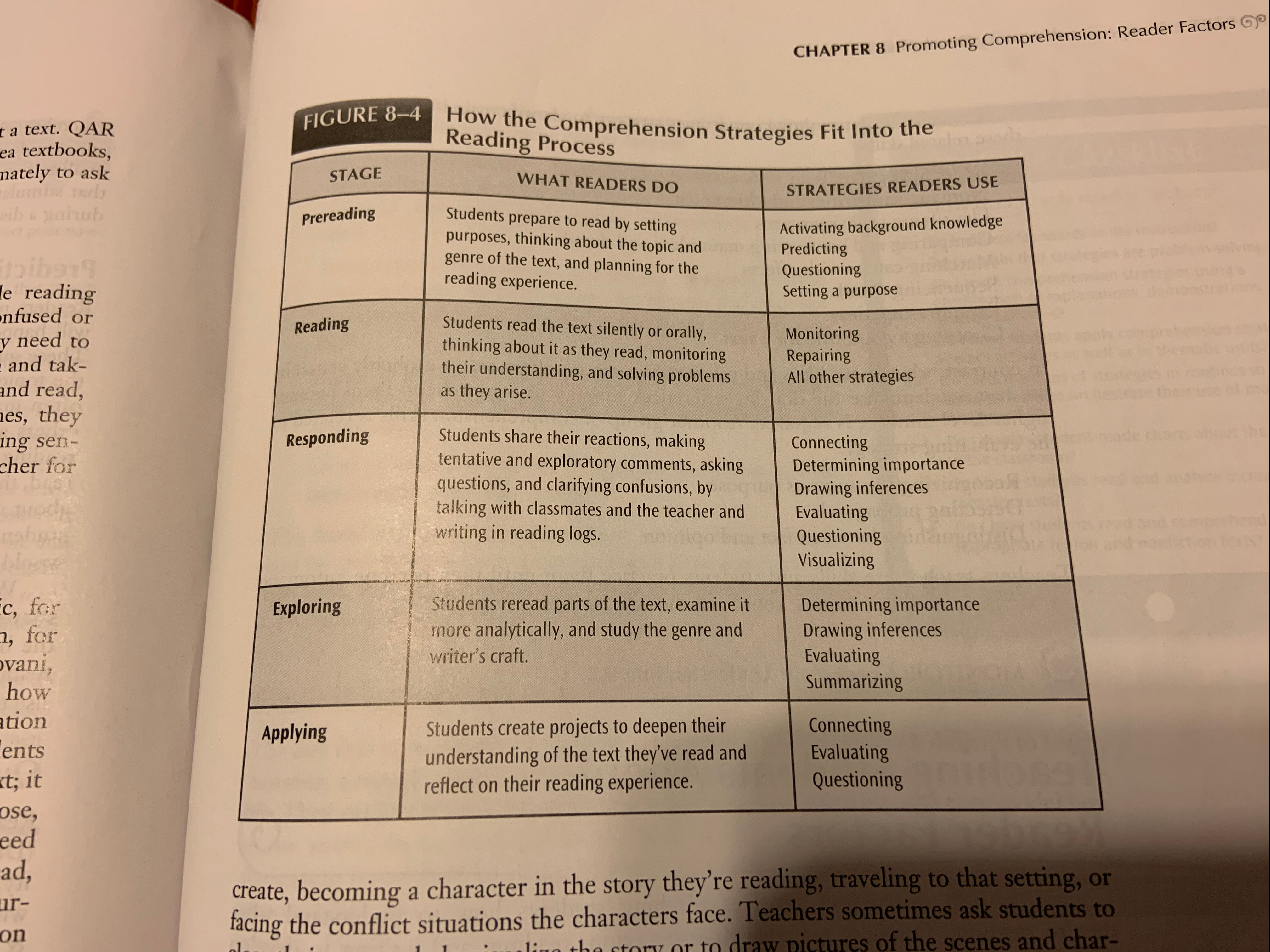
Ways to teach comprehension-
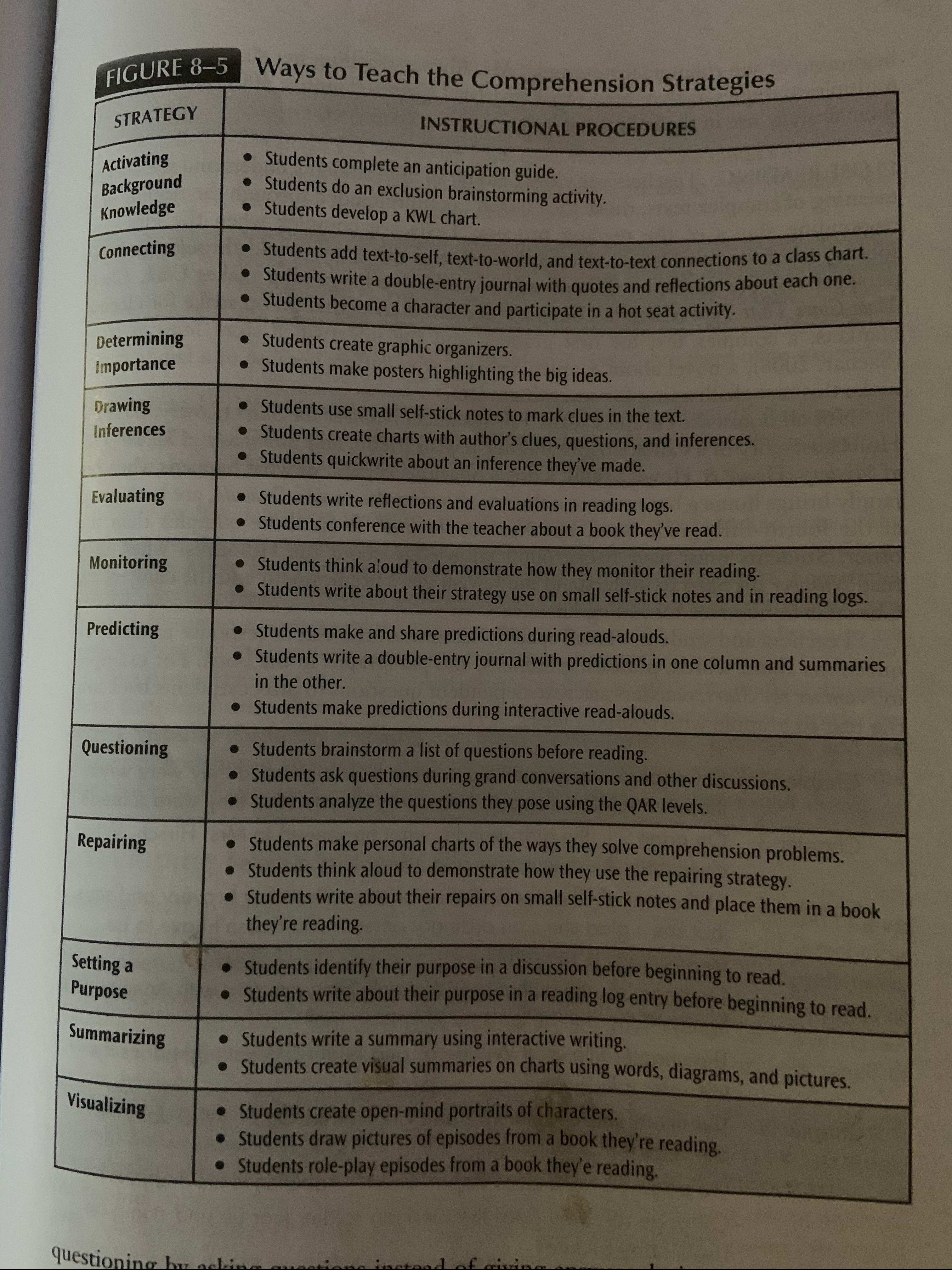
Assessing comprehension- Cloze Procedure: teachers examine students understanding of a text using the cloze procedure where students supply the deleted words in a passage taken from a text they have read. Story retellings: where a teacher has a student retell a story they have read or listened to, to assess literal comprehension. The story telling should be coherent and well organized and should include big ideas and important details.
Factors affecting students motivation-
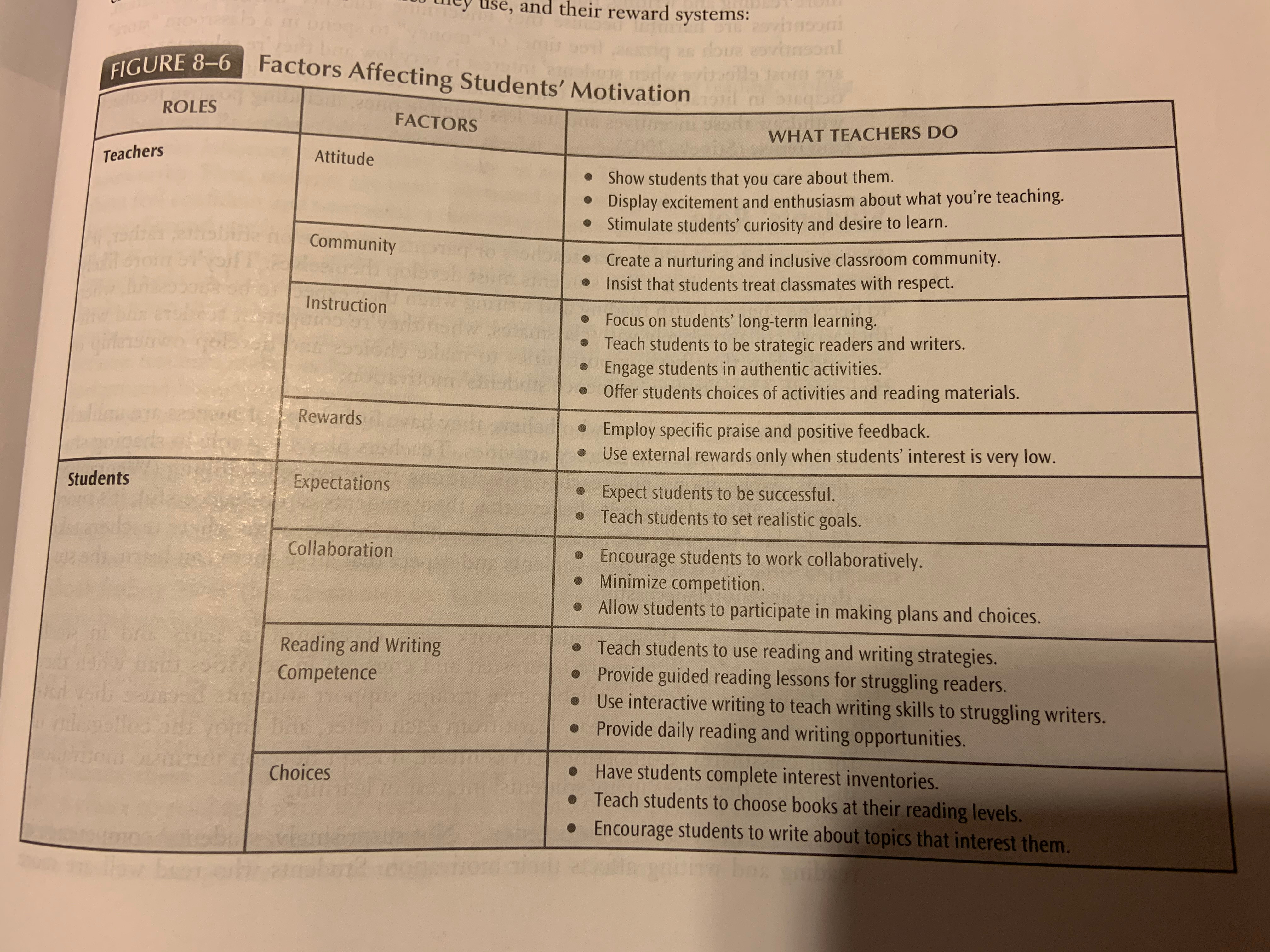
Application to classroom- Effective teachers demonstrate their responsibility and commitment to faciliatating their students comprehension when they emphasize that comprehension is a process involving both reader factors and text factors. Students use comprehension strategies to direct their reaading and monitor their understanding and teachers teach the students how to apply the comprehension strategies to support what it is they student is understanding in the text. Students movtivation is nurtured through a variety of literacy activites to help keep them engaged.
Works Cited:
Tompkins, G. E. (2017). Literacy for the 21st century: a balanced approach. Boston: Pearson.
 Amanda Jachthuber