Key Vocab and Concepts:
Differentiation- means “shaking up” what goes on in the classroom so that students have multiple options for taking in information, making sense of ideas, and expressing what they learn.
Differentiating the Content- Content is the ‘what’ of teaching and reflects Common Core grade-level standards. Teachers concentrate on essential content to meet student needs and then provide more instruction/practice for some or less for others. If students are familiar with content the increase the complexity of instructional activities. Students are assessed and then matched with appropriate activities.
Differentiating the Process- Process is the ‘how’ of teaching. This includes the instruction provided, materials used, and activities involved to make students successful. Students are grouped for instruction and given reading material appropriate for their level. Decisions about involving students in activities that allow them to apply what was learned through oral, written or visual means.
Differentiating the Product- Product is the result of what was learned. It shows what students understand and how well they can apply what was learned. Projects such as posters, board games, multimodal reports or even a puppet show are created. The complexity of projects vary by the level of thinking that is required to complete the project.
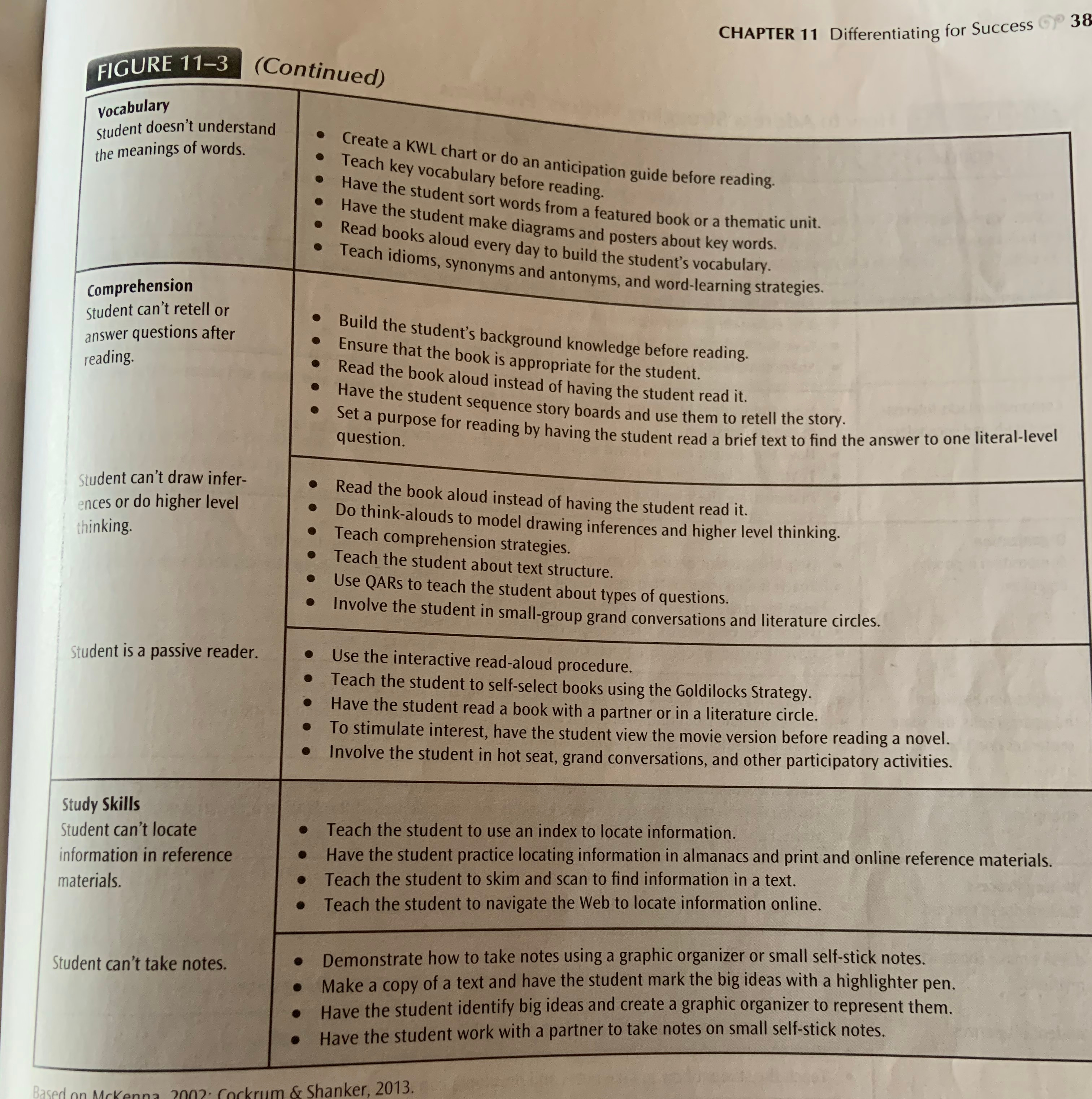
How to address struggling readers problems- 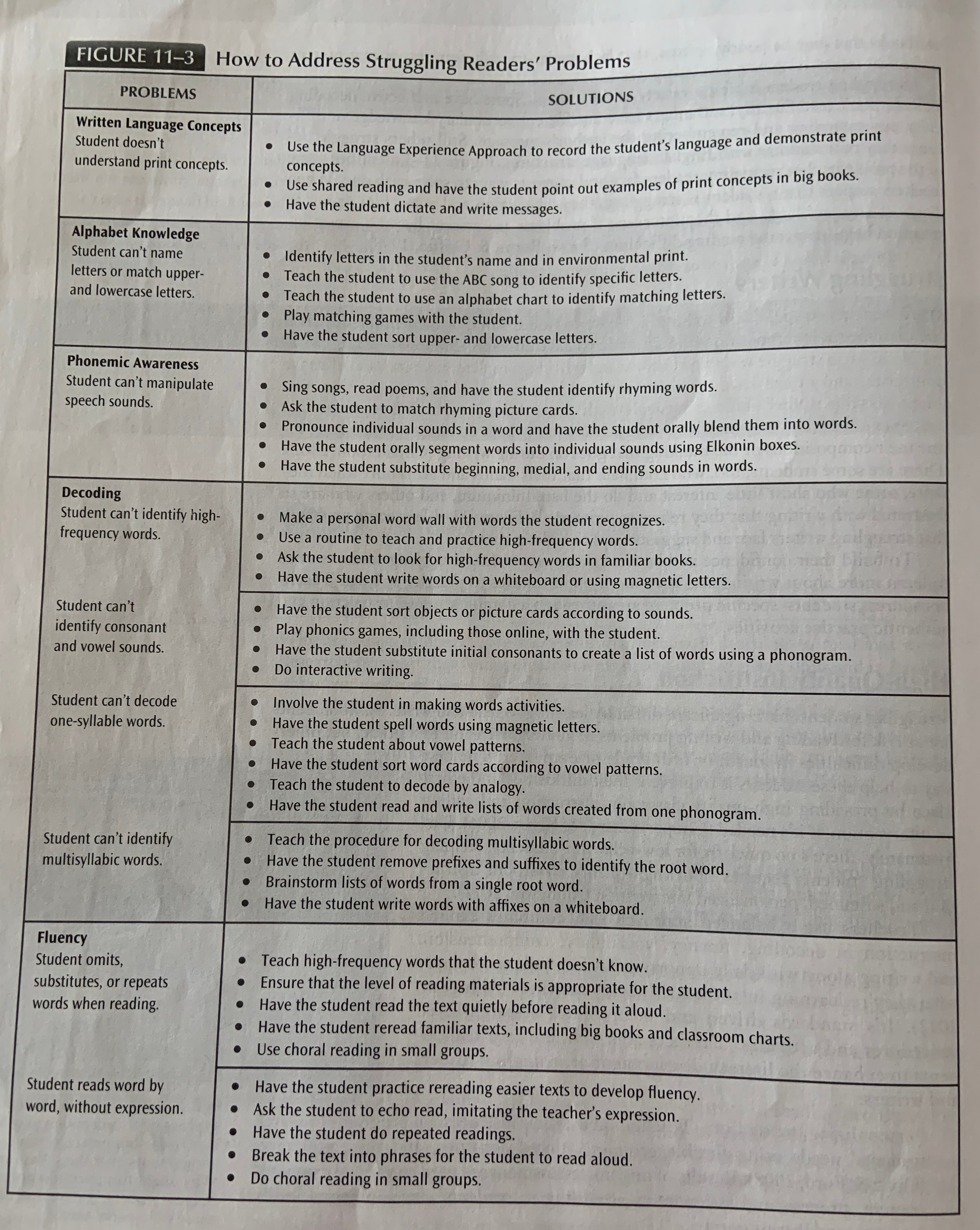
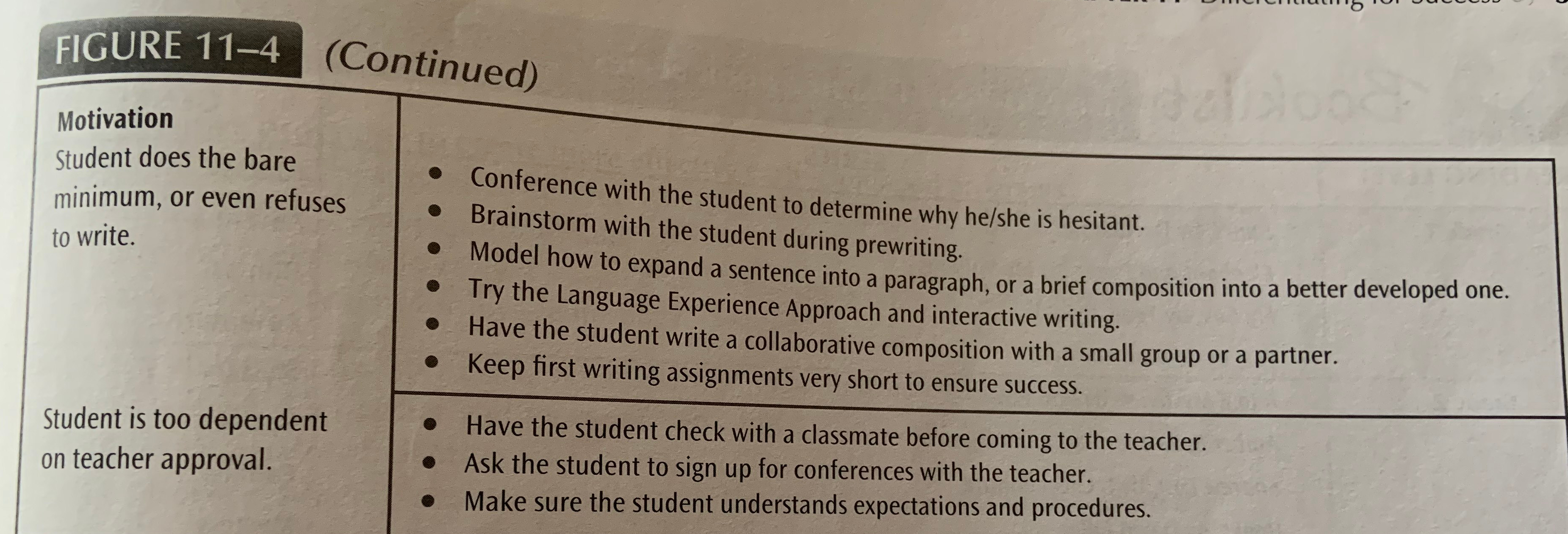
How to Address Struggling Writers Problems- 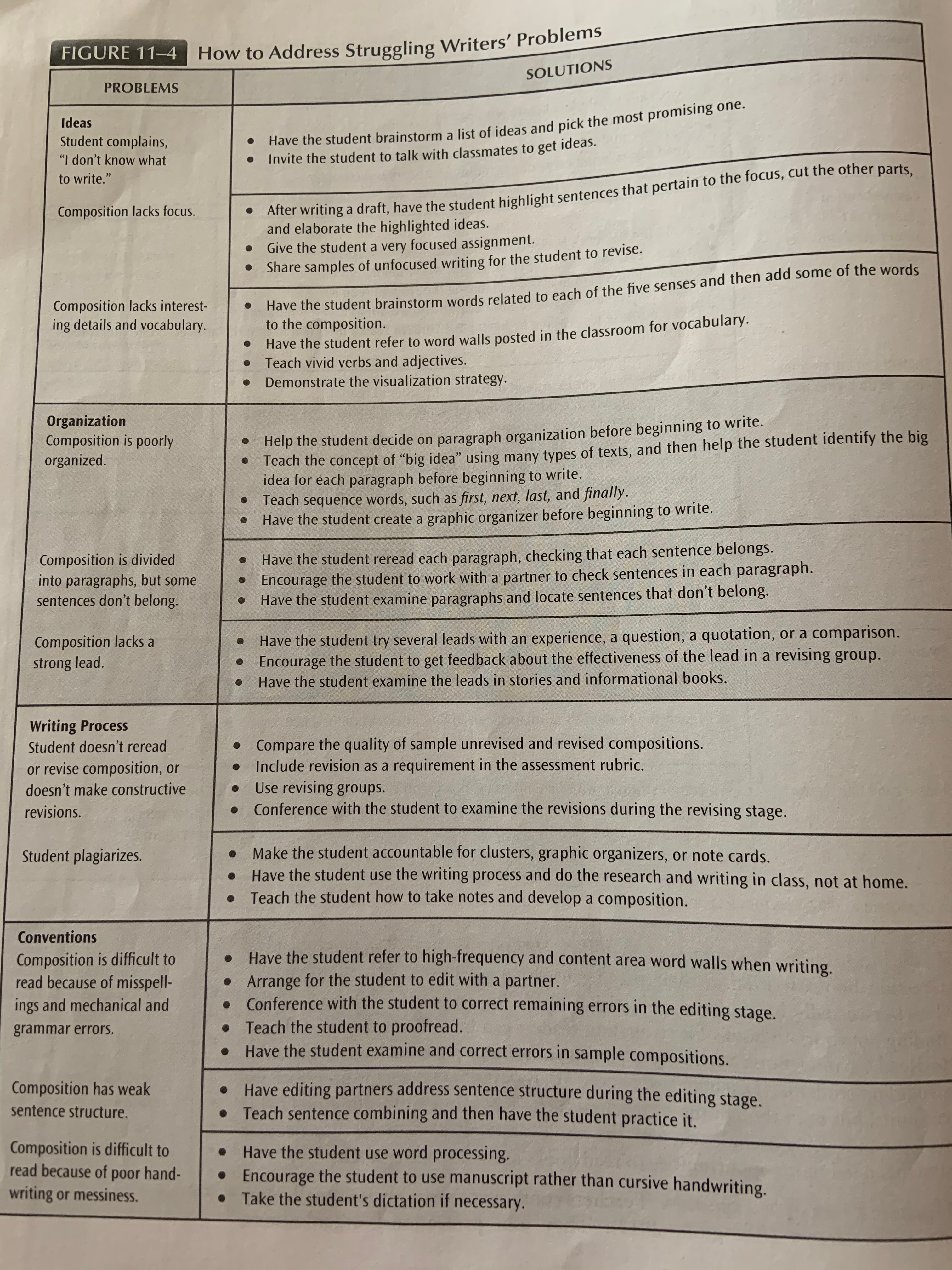
Grouping for Instruction- 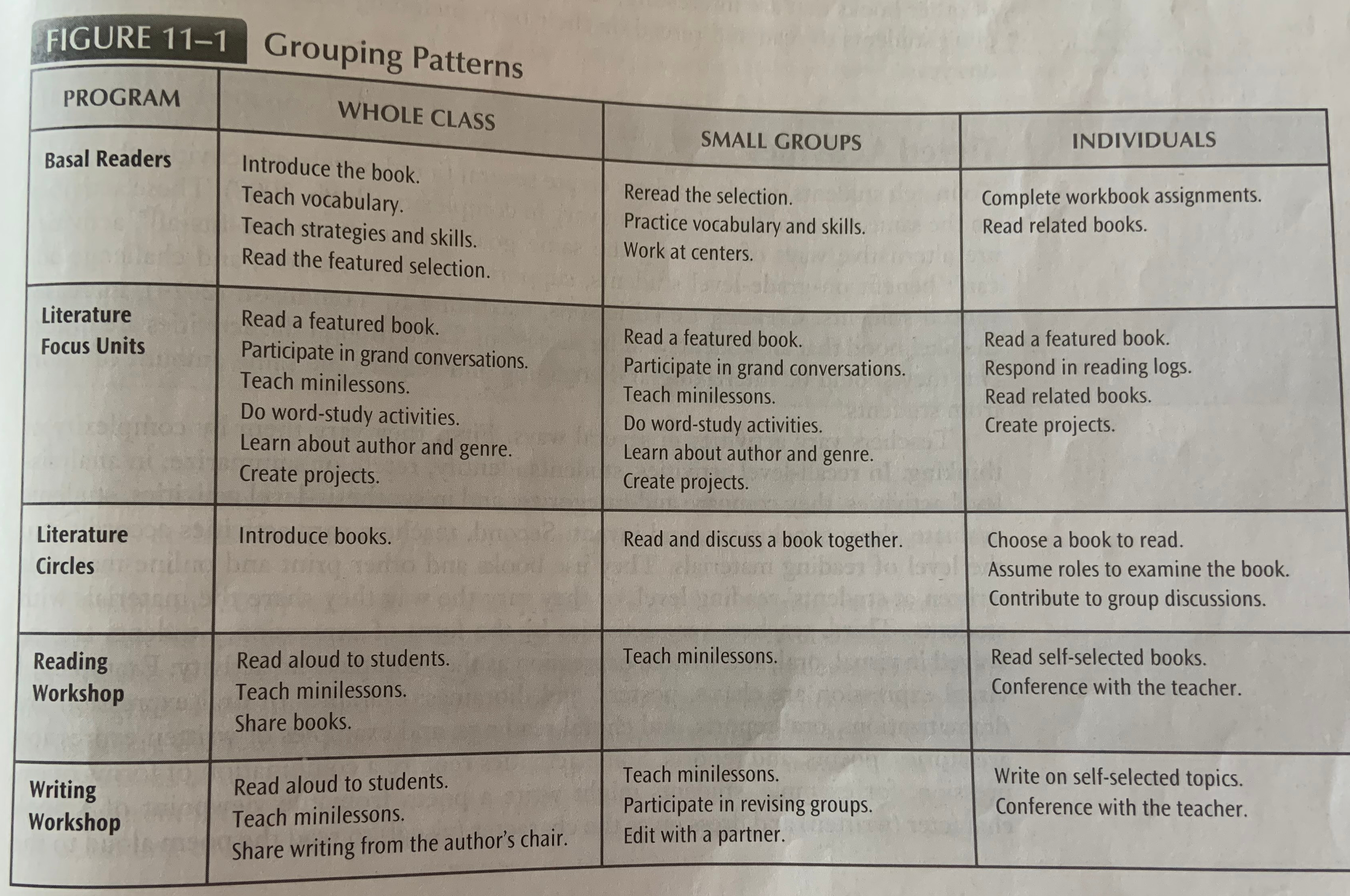
Tiered Activities- Activities that focus on the same essential knowledge but vary in complexity. Might include recall level activities, reading material level, or activities that allow expression or a combination of the different forms. Tiered activities allow for all students to try and be successful.
Literacy Centers- 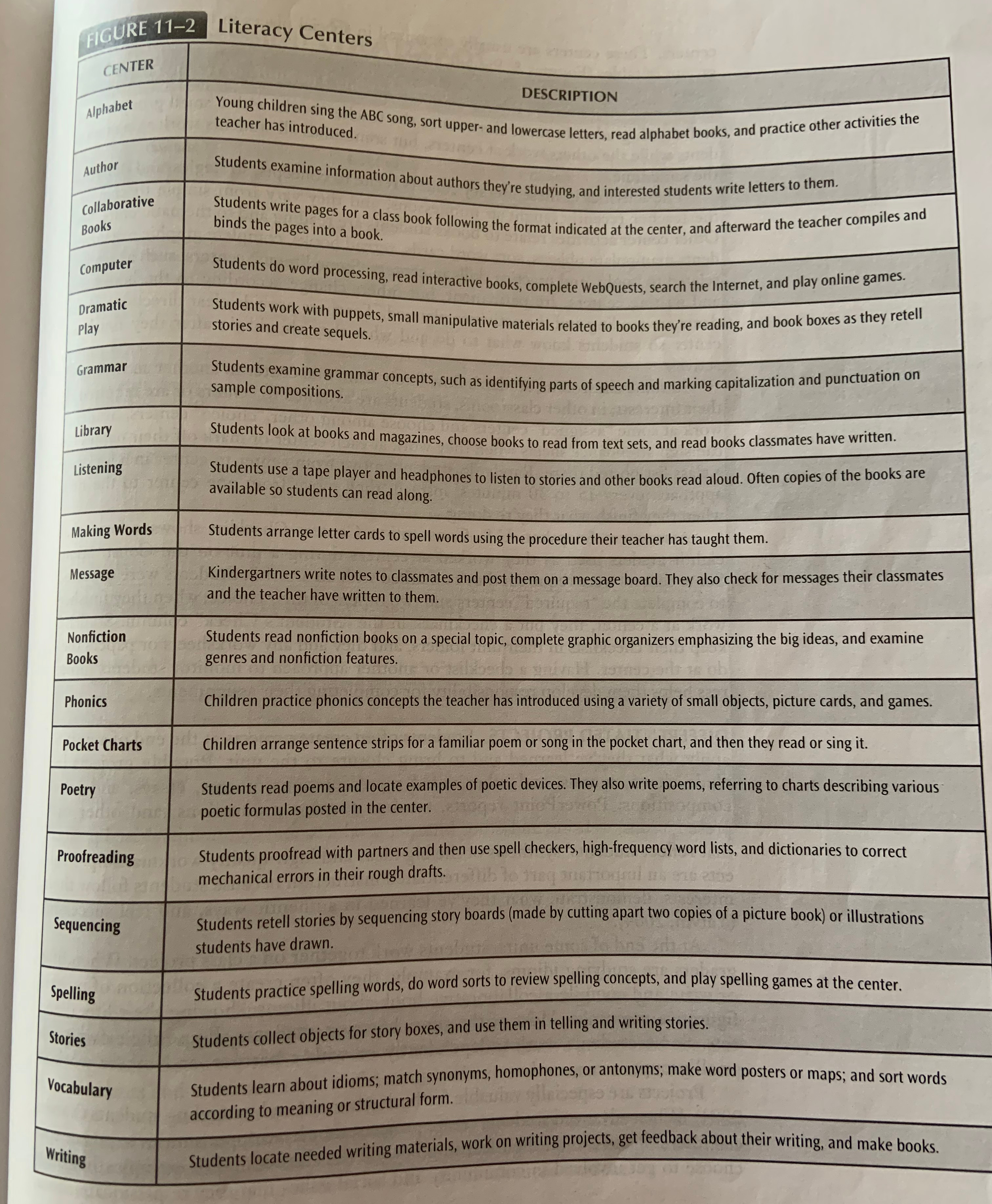
Interventions- Are intense, individualized instruction for struggling readers/writers to solve reading/writing problems and accelerate their growth.
Response to Intervention (RTI)- School wide initiative to identify struggling students quickly, promote high-quality classroom instruction, provide effective interventions and increase likelihood that students will be successful. Three Tiers include: Tier 1 Screening and Prevention, Tier 2 Early Intervention and Tier 3 Intensive Intervention.
Intervention for Older Students- Three components of intervention program include: High Quality Instruction- appropriate literacy instruction tailored to student needs and instructional time is spent on vocabulary and comprehension. Instructional-Level Reading Materials- Teachers use books at students instructional level that are also appropriate for their age. More time for Reading- Teachers increase the amount of time students are suppose to read independent books.
Application to Classroom- I will show responsibility and commitment to teaching all students by personalizing their instruction by modifying content, the process, and product for both struggling and non-struggling students. I will also make sure to allow extra time for reading and writing with a balanced approach for all students.
 Amanda Jachthuber