Key Vocab and Concepts:
Basal- short stories that include individual books for students, a teacher edition, workbooks, assessments and activities for a specific reading level.
Components of Basal- There are five components that consist of reading selections in the grade-level textbook, instruction on strategies and skills, workbook assignments, independent reading opportunities and a management plan that includes flexible grouping and regular assessment.
Materials in basal reading programs- 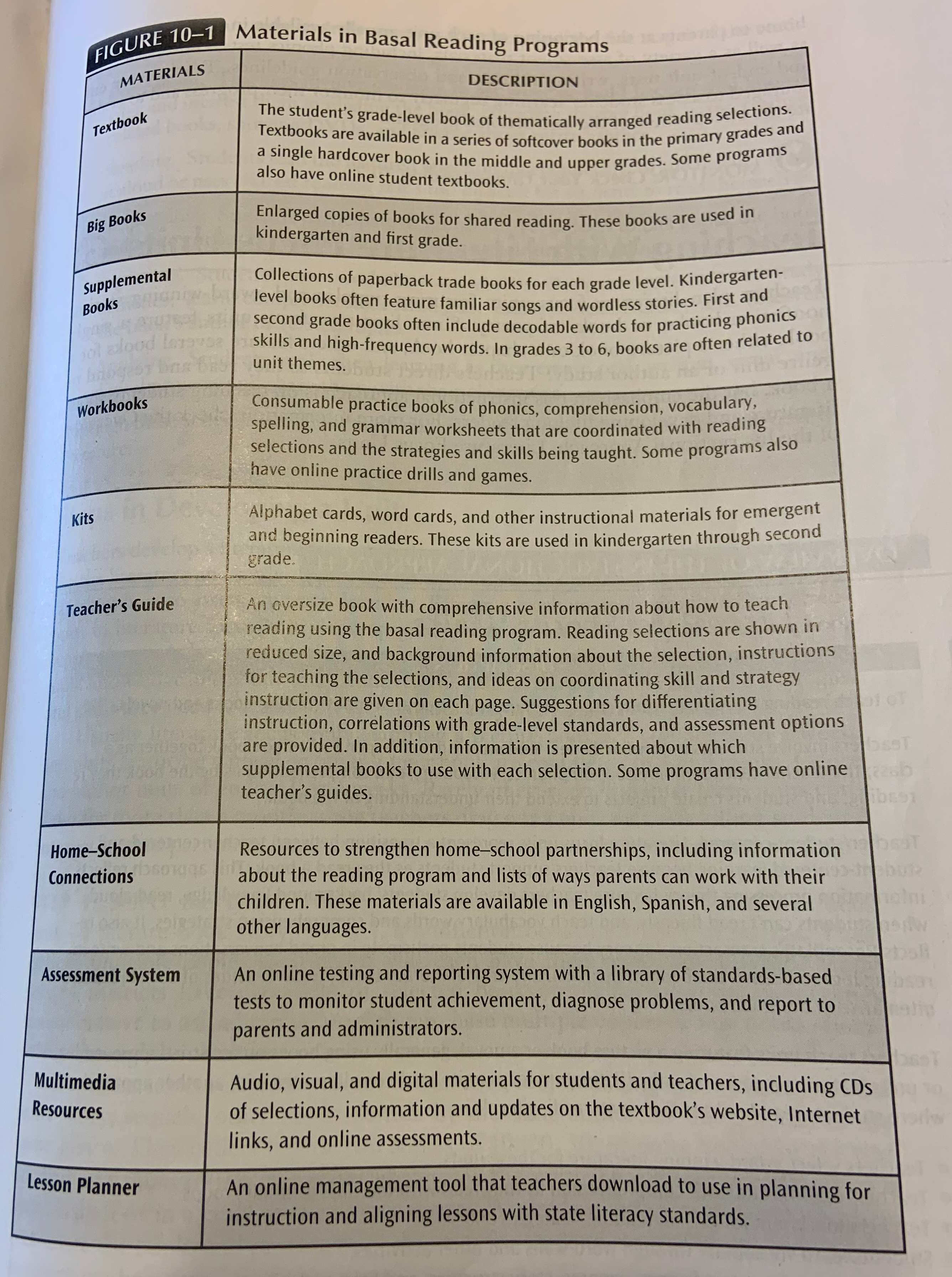
Literature Focus Units- Teach reading through literature, using high-quality, grade-appropriate picture books and novels. The units include activities incorporating the five stages of the reading process which include pre-reading, reading responding, exploring, and applying.
Steps in developing a literature focus unit- Step 1: Select the literature, Step 2: Set Goals, Step 3: Develop a unit plan, Step 4: Coordinate grouping patterns with activities, Step 5: Create a time schedule and Step 6: Assess Students
Literature Circles- An instructional approach in which students meet in small groups to read and respond to a book.
Key Features of a Literature Circle- Choice: students choose books the books and groups in which they will participate in. They share in setting a schedule for reading, discussing and roles that will be assumed in the discussions. Literature: should be at students reading level and manageable. Response: students meet several times to discuss the book. Through the discussions students summarize, make connections, learn vocabulary, and explore the authors use of text factors.
Types of Talk During a Literature Circle- 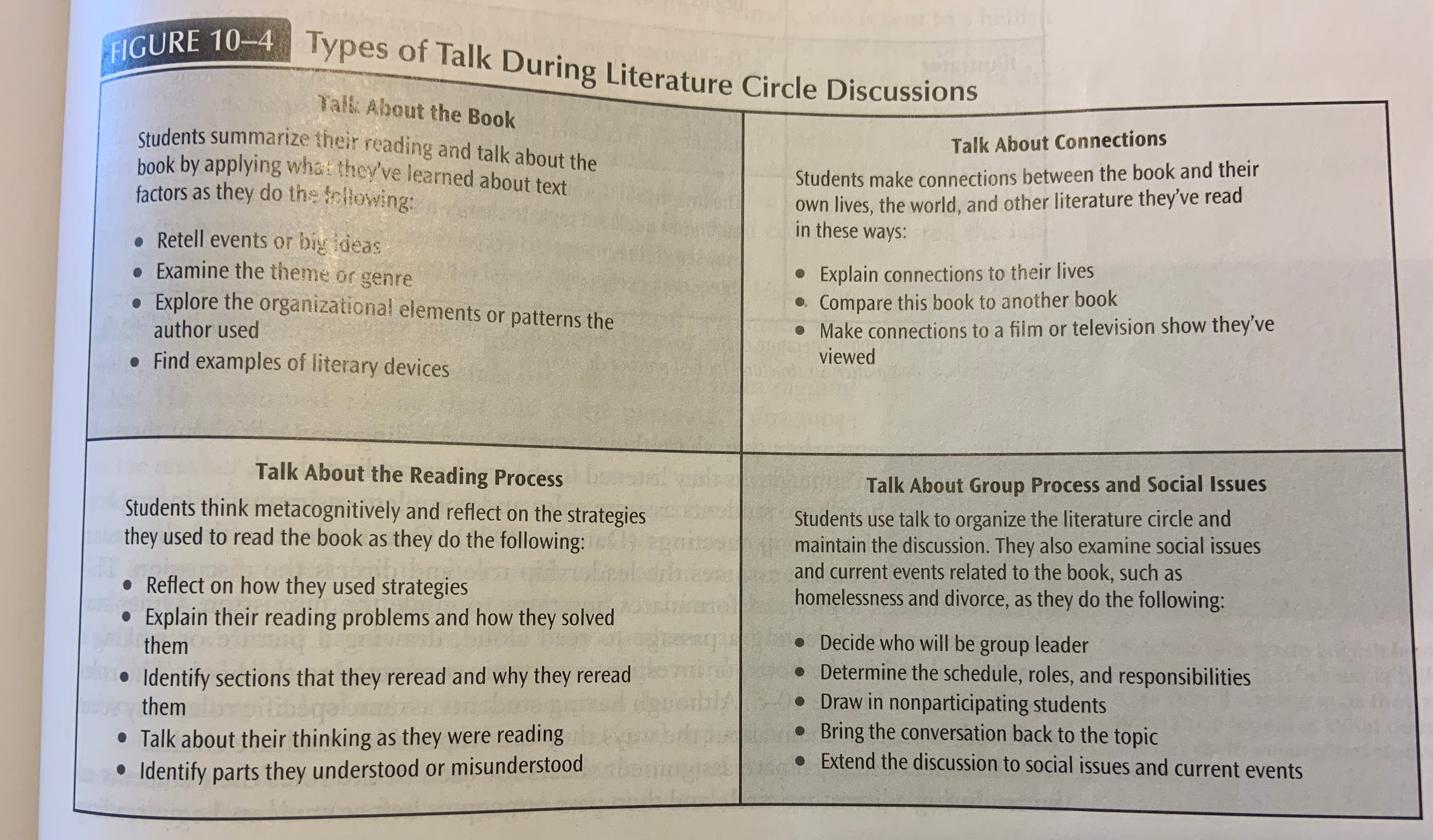
Roles Students Play in Literature Circles- 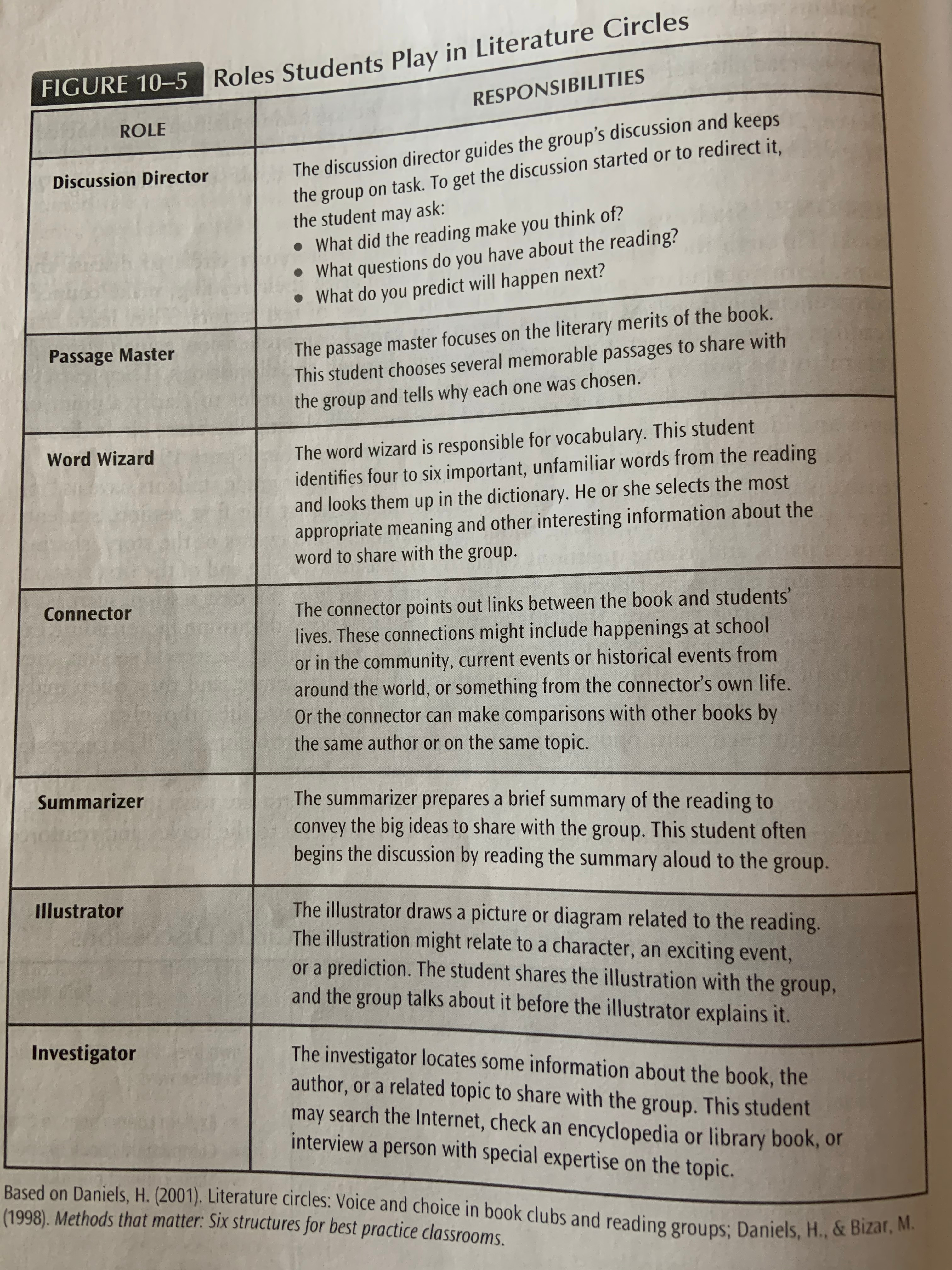
Reading Workshop- An individualized reading program where students read books that they choose and respond to books through writing in reading logs and conferencing with both teachers and classmates.
Writing Workshop- Students write on topics that they choose and assume ownership of their writing and learning. The teachers role changes from being the provider of knowledge to serving as a facilitator and guide.
Think-Alouds- A procedure in which teachers or students verbalize their thoughts while reading or writing to describe their strategy use.
Grand Conversations- lively talks about a book. Teacher initiates the conversation with a questions or interpretive prompt.
Goldilock Strategy- A strategy for choosing “just right” books
Responses in Reading Workshop- 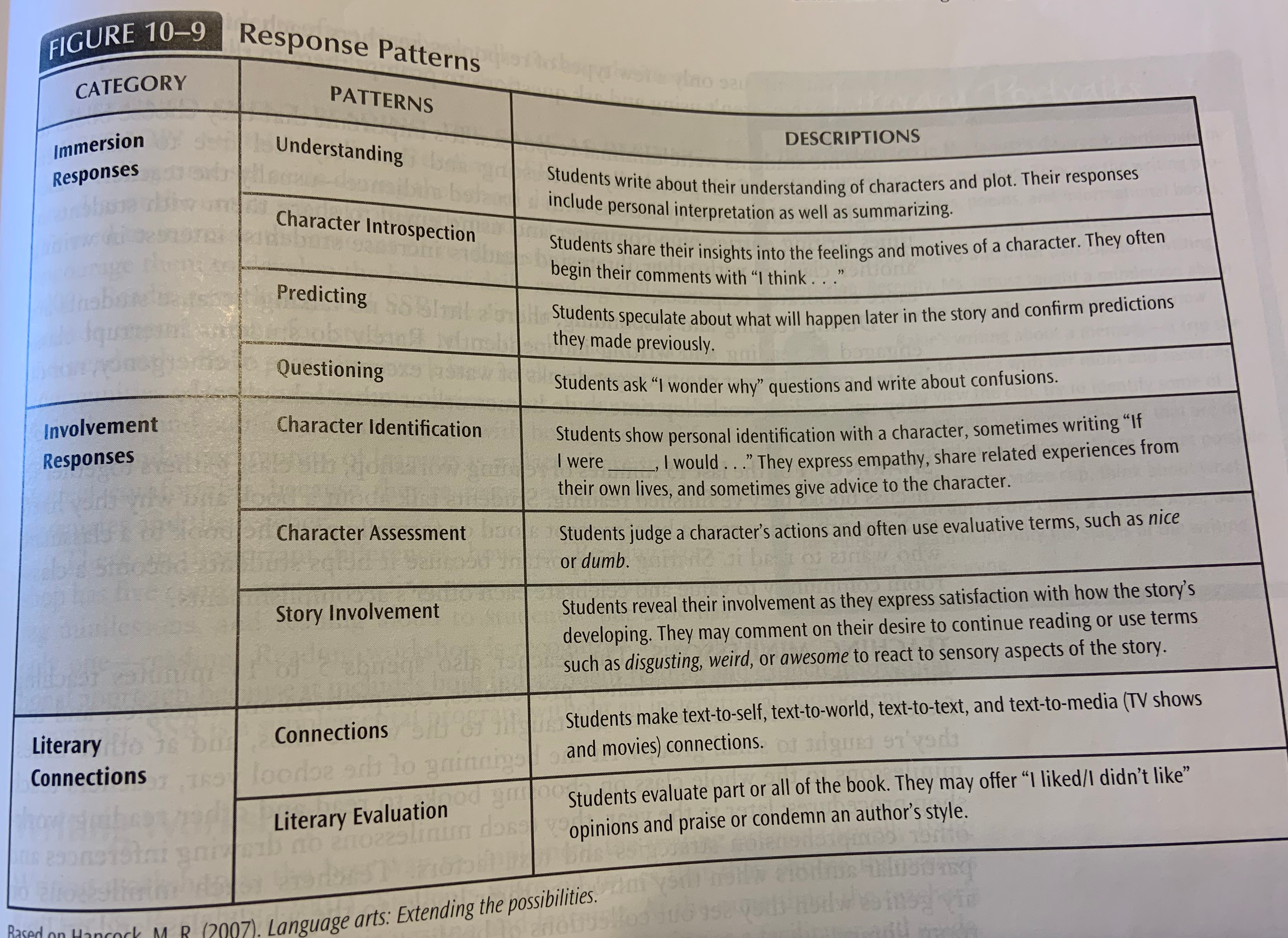
Sustained Silent Reading (SSR)- An independent reading time set aside during the school day for students in one class or even the entire school to silently read self-selected books. It is used to increase the amount of reading students do and encourage them to develop a daily reading habit.
Management of the Workshops- Begins the first day of school and throughout the year provide students time to read and write and how to respond to books and to others writing. A schedule is made, charts are used, and students are observed.
Classroom Application- Organization for instruction is done using a combination of approaches to ensure students can read grade-level books and meet both the reading and writing standards. Teachers use leveled books to teach reading in a guided reading lesson. Teachers supplement basal reading programs with authentic reading and writing activities. Students are presented with literature focused units and teachers incorporate choice, literature and response into literature circles.
Video-Teaching Strategies For Introducing Literature Circles to a 4th Grade Class- Take time at the beginning of the year to teach and model the do’s and don’ts. In circle the students will communicate, create, critically think and collaborate. Day 1: introduce book, the group roles and explain expectations. Day 2-3: review group roles, students will independently read and work while the teacher holds a small group. Day 4: review of expectations and student literature discussions. After the discussion new roles will be given and a new book.
 Amanda Jachthuber